Lead Generation
The Contractor Lead Funnel Framework: From First Search to Booked Job
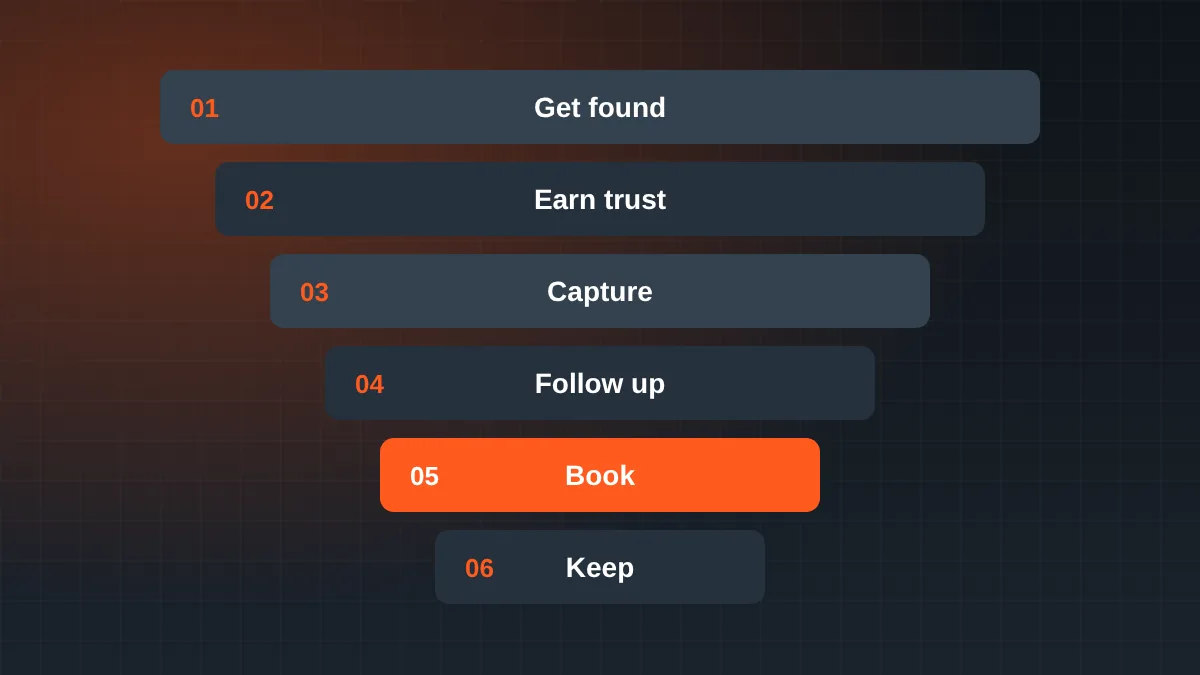
A contractor lead funnel is the path a customer takes from their first search to a booked job. It has six stages: get found, help them choose you, capture the enquiry, follow up fast, book the job, and keep the customer. Most trades businesses lose work in the middle stages without realizing where.
Key takeaways
- Every stage has a different job. Fixing traffic won't fix a broken follow-up.
- Most lost jobs leak between the enquiry and the callback.
- Every enquiry needs an owner and a status, or it gets dropped.
- Promotional follow-up messages in Canada must follow CASL.
- Fix one leak at a time, starting with the biggest.
Most contractors measure marketing by how many leads came in. The better question is how many became booked jobs, and where the rest went. A lead funnel is a simple way to answer that.
What is a contractor lead funnel?
It's the series of steps between someone searching for your trade and that person becoming a paying customer. Each stage has one job. When a stage fails, everything after it suffers, no matter how much you spend at the top.
Stage 1: Get found when people search
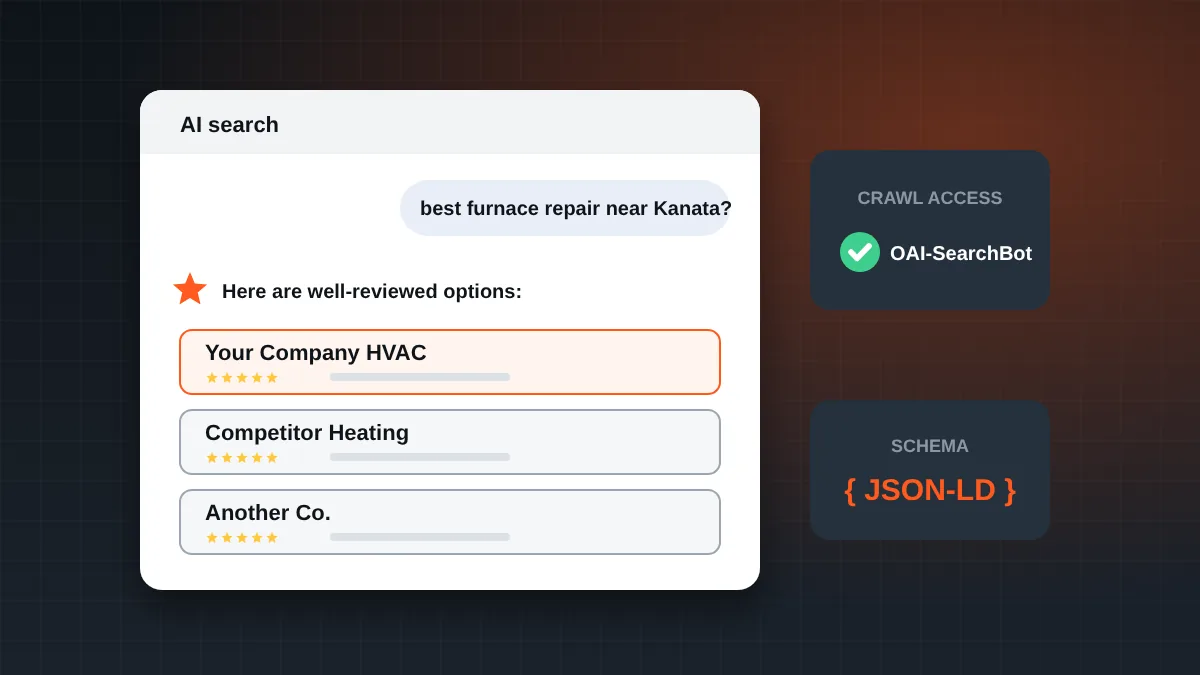
The customer has a problem or a project and starts searching on Google, Google Maps, Bing or an AI tool.
What this stage needs:
- Consistent business details across your website and listings
- Clear descriptions of your services and service area
- An accurate, active Google Business Profile with the right categories
Stage 2: Help people choose your business
They've found you and a few competitors. Now they're deciding who to call.
- Make services and service areas easy to find within seconds
- Explain what the first conversation or visit involves
- Show real photos, reviews and examples of similar work
- Avoid claims you can't back up, like "#1 in Toronto" with no proof
Stage 3: Capture the enquiry
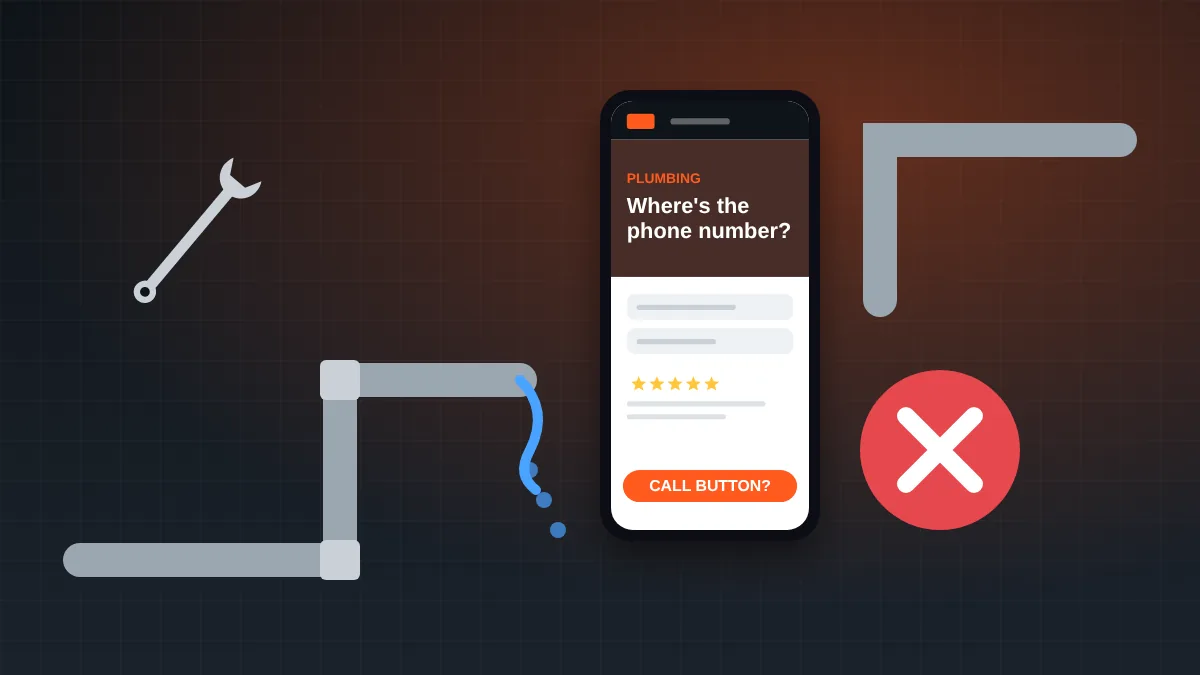
This is where a lot of sites lose people. The customer is ready, but the phone number is hidden or the form is a questionnaire.
- Keep a click-to-call button visible on mobile
- Use a short form that asks only what you need to respond
- Make sure every enquiry reaches someone who can act on it, including after hours
Stage 4: Follow up automatically, with a human behind it
Speed matters. A homeowner with a leak usually calls the next name on the list if nobody responds.
- Log every enquiry in one place
- Assign an owner and a status to each one
- Send an immediate acknowledgement so the customer knows it landed
- Follow up on quiet quotes on a set schedule
In Canada, promotional messages are covered by Canada's Anti-Spam Legislation (CASL). Transactional replies to a customer's own request are treated differently from marketing messages, so keep your follow-up relevant and get proper consent before adding anyone to promotional lists.
Stage 5: Turn the conversation into a booked job
- Confirm the service, location and timing
- Explain your estimate options clearly, including any call-out or assessment fee
- Agree on next steps and confirm them in writing
Stage 6: Keep the customer after the work is done
- Close out the job properly and share care or warranty information
- Ask for a review while the experience is fresh
- Keep your contact details and website current so they can find you again, and refer you
Where to start
Don't try to fix everything at once. Take one real enquiry from last month and follow it through each stage. Where did it slow down? Where did it nearly get lost? Fix that gap, then pick the next one. Repeat monthly and the whole funnel gets tighter.